All articles
ESOMAR Congress 2025
Dates: 28 September – 1 October 2025
Location: O2 universum, Prague, Czech Republic
ESOMAR Congress is the largest global gathering of the market research and consumer insights industry, bringing together agencies, brands, technology providers, and independent experts from more than 100 countries.
For leaders shaping insight organisations, however, ESOMAR is more than a conference. It is a diagnostic moment — a place where long-term shifts in research delivery, operating models, and decision expectations surface clearly and all at once.
For DataTile, ESOMAR Congress 2025 was an opportunity to observe how the industry is evolving in practice: what is genuinely changing, what is being overstated, and where structural problems remain unresolved.
DataTile was represented by Alex Chilingaryan, Founder & CEO and Sumran Kaul, Business Strategy Director.
Across four days, Alex and Sumran attended main-stage sessions, case studies, and private conversations with agency leaders, insight directors, and client-side teams.
Many of these discussions circled back to the same underlying question: How do we move from increasingly complex analysis to faster, more confident decision-making?

What we wanted to validate
(and what we were ready to challenge)
Before arriving in Prague, we had a clear set of objectives.
First, we wanted to sense-check the dominant narrative. AI, automation, and synthetic data are now default topics in industry discourse. ESOMAR is where it becomes clear which of these are meaningfully embedded in real workflows — and which remain aspirational.
Second, we wanted to listen closely to how insight teams are actually operating today:
- Where time is still being lost in data processing
- Where quality is compromised under delivery pressure
- Where internal tools struggle to scale across trackers and studies
- And where leadership expectations are shifting toward speed, clarity, and consistency
Third, we wanted to pressure-test DataTile’s own perspective — whether long-standing challenges around speed to insight, governance, repeatability, and executive-ready outputs (such as survey dashboards, automated reports, and consistent toplines) are still widely felt across the industry.
And finally, ESOMAR is about people. Some of the most revealing insights came not from the stage, but from candid, off-agenda conversations with peers navigating the same constraints.

ESOMAR Congress confirmed that the challenge isn’t a lack of data or tools — it’s the time it takes for insights to actually influence decisions. That gap is still surprisingly wide.

When very different speakers started saying the same thing
Across the programme, several themes surfaced repeatedly — often from very different angles:
- AI moving from experimentation to infrastructure, shifting the conversation from novelty to governance
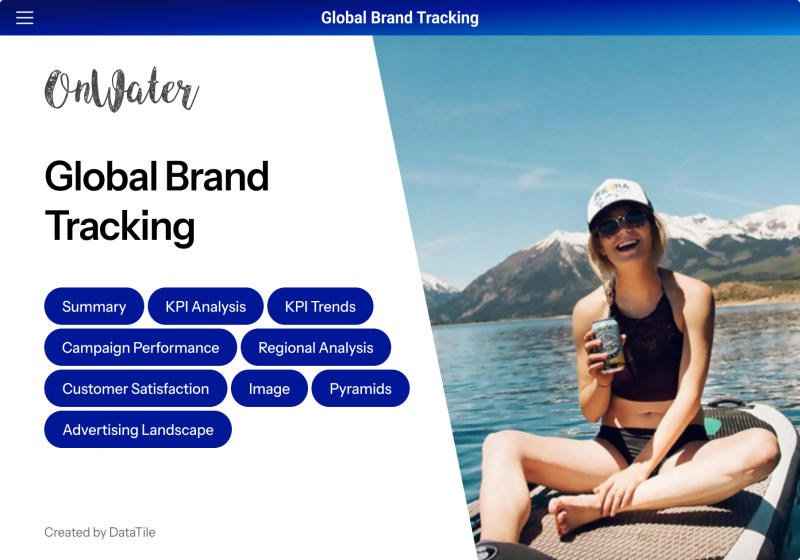
- Evolving approaches to brand tracking and brand health tracking, with greater emphasis on narrative and context
- Automation becoming a necessity for scaling research delivery, rather than a differentiator in itself
- The continued importance of human judgment, intuition, and storytelling alongside analytics
- A growing tension between richer analysis and the time it takes for insights to reach leadership
Notably, the strongest cases were rarely about more data. They were about better framing, clearer signals, and outputs designed to support decisions — not exploration for its own sake.
What we heard when the slides ended
Mid-event reflections gathered from voice memos by our Founder Alex Chilingaryan and Business Strategy Director Sumran Kaul revealed a consistent undercurrent beneath the formal programme.
AI as wallpaper.
Everyone is using it. Everyone is pitching it. To the point where not mentioning AI at all sometimes sparked more interest in 1:1 conversations. The implication is clear: AI alone no longer differentiates. Advantage now comes from how well it is governed — and when teams deliberately choose not to lean on it.
Speed to decisions remains the elephant in the room
Across conversations, the gap between data collection and executive decision-making is still painfully wide. Very few tools meaningfully shorten that cycle — which is precisely the problem DataTile was built to address.
Decision-grade signals matter more than volume
From adidas’ Share of Search to L’Oréal’s work with rare-audience quantification, the most compelling examples focused on better-framed signals for leadership, not deeper analysis for analysts.
Stories outperform attributes
Narrative tracking, cultural foresight, and even LLM “findability” (Pernod Ricard / Ipsos) reinforced a simple truth: markets respond to the story being told, not just the features being measured.
Representation is moving to the centre
From soundscapes to disability in advertising, inclusion is increasingly framed not as CSR, but as strategy.
And intuition still matters
The Deutsche Fußball-Bund case was a reminder that data is powerful — but judgment can fundamentally change outcomes.

What didn’t feel like a ‘takeaway’ — but a warning
What stood out most was not a single idea, but a pattern. Despite more sophisticated methods, richer data, and near-universal AI adoption, many organisations still struggle to translate insight into timely, confident action.
Too often, insights remain trapped in complex workflows, delayed reporting cycles, or outputs that are technically impressive but operationally disconnected from leadership needs. The risk is not falling behind on technology — it is continuing to invest in insight production while quietly eroding its influence at the moment decisions are actually made.
A philosophical note from Sumran Kaul
A takeaway for me was AI was everywhere, but Alex took me to the Prague Astronomical Clock today. It made me think… It was made by people, and has been drawing crowds since 1410. It's not because it tells time - any clock can do that, it's just mechanics. But because it combines science, art, imagination and storytelling.
AI will be everywhere, but that's just mechanics. Like a clock. And everyone will have it. Ultimately, in the end what will draw crowds (business) in will be how disciplines are connected, imagination in thinking and how we tell stories that interest and engage people.
And of course, in the end what makes events like ESOMAR Congress popular is the shared experience and collision of people. Not tech itself.
What the industry is still avoiding saying out loud
ESOMAR Congress 2025 reinforced a core reality: the value of insight is increasingly determined by how quickly and clearly it reaches decisions.
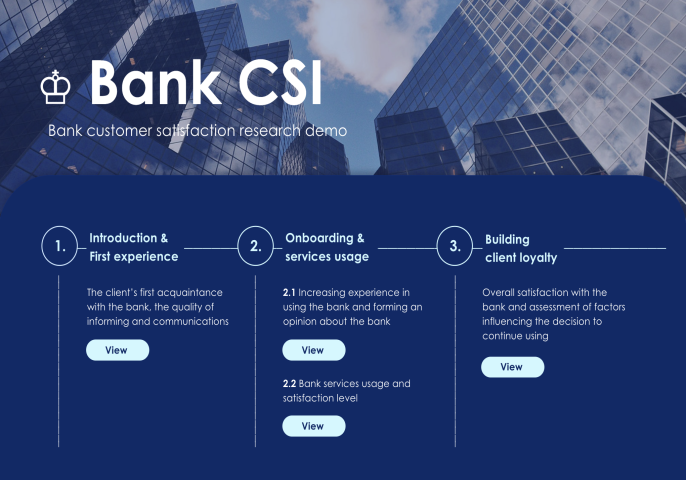
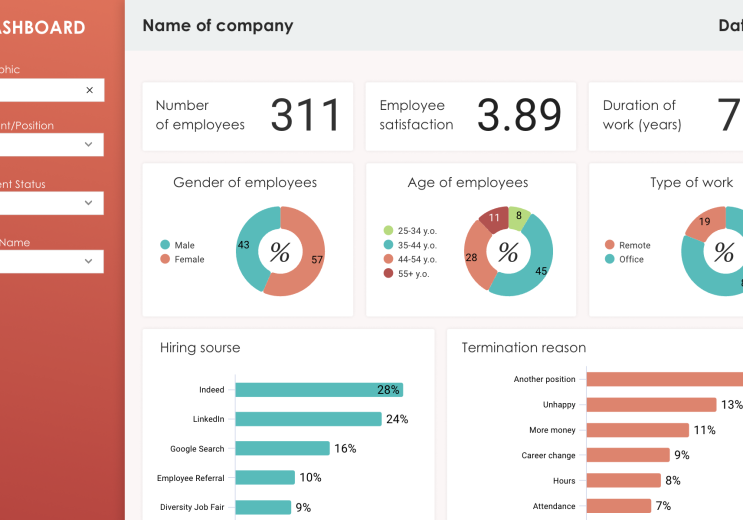
As analytical techniques, AI capabilities, and data sources continue to expand, the bottleneck is no longer analysis itself. It is orchestration — turning complex inputs into interactive dashboards, consistent data visualisation, and decision-grade outputs leadership can trust.
For many organisations, this gap between insight generation and decision-making remains significant. And addressing it is now a strategic priority — not an operational nice-to-have.
What will separate leaders from laggards next
We are continuing to process conversations and observations from ESOMAR Congress 2025. In the weeks ahead, we will share more focused perspectives on:
- AI as infrastructure rather than competitive advantage
- Decision-grade dashboards versus exploratory analytics
- How insight teams can scale without slowing delivery
- What leadership now expects from modern research delivery
ESOMAR Congress may be over, but the questions it surfaced will shape the future of market research and consumer insights long after the event itself.